
Spotlight On: Robyn Farley Gold Coast Clinical Psychologist
Updated: May 19

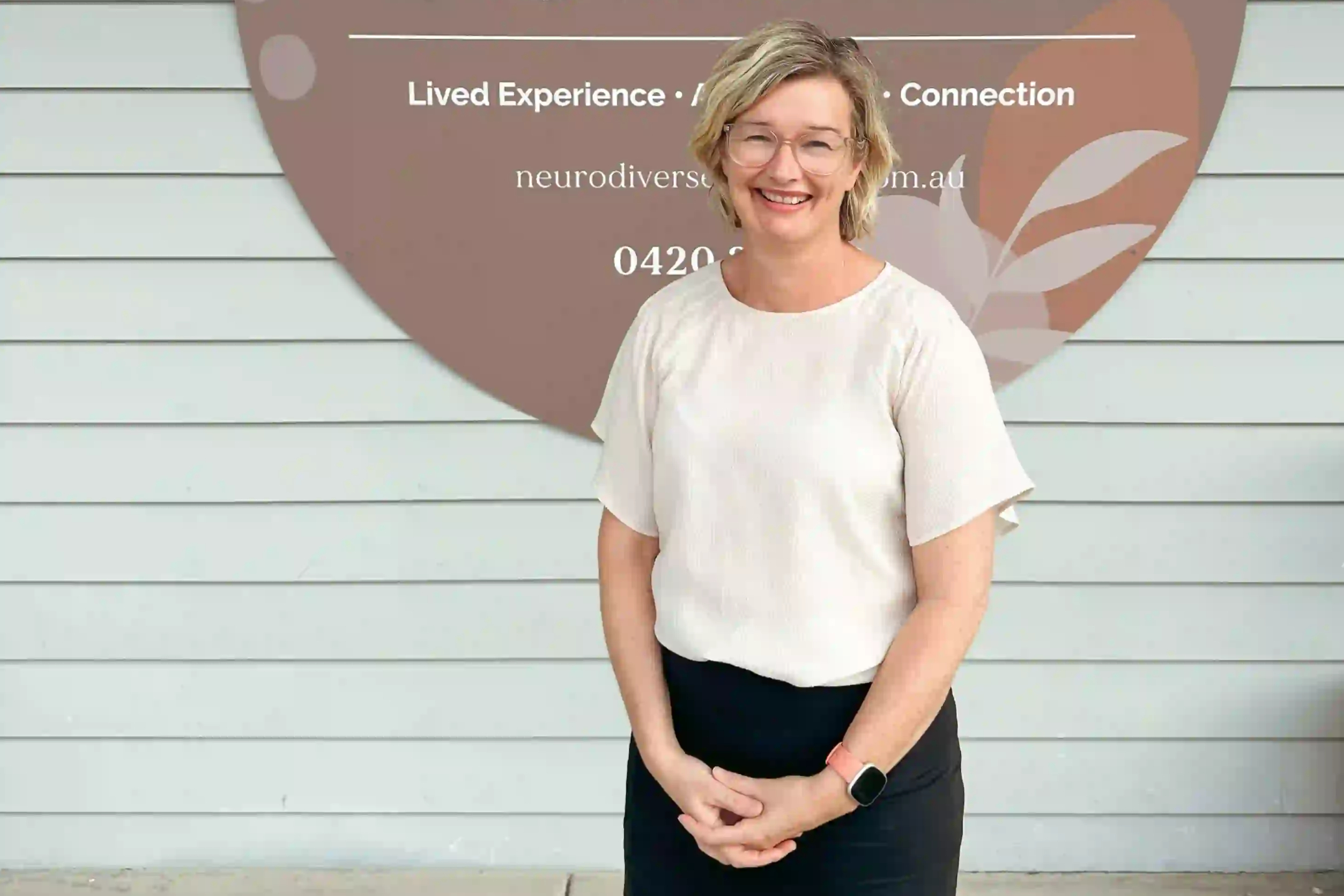
Clinical Psychologist: Robyn Farley (she / her)
In her own words:
“What are some of the challenges you’re especially interested in supporting people through"
I’m particularly drawn to working with people who are trying to make sense of themselves—often later in life, and often in the context of
neurodivergence.
Many of the people I work with have spent years feeling different, misunderstood, or somehow out of step, without quite knowing why.
I really value being part of that process of joining the dots—helping things finally make sense in a way that feels relieving, validating, and empowering. A big part of my work is supporting people who are clearly capable and insightful, but who struggle to translate that into everyday functioning.
Together, we explore that gap with curiosity and compassion, rather than judgement. I’m also very aware of how exhausting masking can be, and I aim to create a
space where people can begin to feel safer being themselves, rather than constantly feeling like they have to perform or hold it all together.
Alongside this, I’m particularly interested in supporting people in their relationships—whether that’s navigating relationship dissatisfaction, communication difficulties, or the impact of trauma on how they connect with others.
I also work with parents, especially within neurodivergent families, where there can
be a unique mix of strengths and challenges to understand and support. I aim to help individuals and families move toward relationships that feel more connected, respectful, and sustainable, while also making space for the realities of difference, stress, and past experiences.
Often, as people begin to understand themselves more clearly (particularly in relation to ADHD or autism or specific learning or emotional challenges), it can bring up a mix of emotions—relief, grief, anxiety, even a sense of disorientation, and I see supporting people through that phase as a really important part of the work.
Alongside building insight, I always keep a focus on the practical side of things too—helping people find ways to shape their environments, expectations, and supports so that life feels more manageable, sustainable, and aligned with how they
actually function best.
What made you choose psychology (or your role) in the first place?
If I really think about it, I don’t feel like I chose psychology in a single, clear moment—it’s more that it gradually unfolded in a way that just made sense. I actually went to university planning to become a teacher, and I took psychology as an elective along the way. Very quickly, I realised how naturally it fit. It tapped into a curiosity I’d always had about people—the way they think, feel, and behave—and it seemed to draw on so many of my natural strengths without me having to force it.
I’ve always been someone who notices people. I tend to pick up on patterns, emotional undercurrents, and the “why” behind what someone is feeling or
doing, not just what’s happening on the surface.
There’s a genuine curiosity there, but also a strong sense of care—I don’t just want to understand people in an abstract way, I want that understanding to actually help them feel less alone, less confused, and more like themselves.
I’ve also always felt quite comfortable sitting with complexity. I don’t feel a strong need to rush to quick answers or neat explanations—in fact, I’m often more interested in the layers underneath.
Psychology gave me a space where that way of thinking is not only useful, but really valued. It allows me to take the time to understand people properly, to hold different parts of their experience at once, and to make sense of things in a way that feels meaningful rather than oversimplified.
I think, too, that I’ve been drawn to the impact of being misunderstood—either seeing it in others or recognising how much it can shape someone’s life. A big part of why I do this work is to help shift that experience, to help people move away from self-blame and toward a more accurate, compassionate understanding of themselves.
That’s especially true in my work with neurodivergence, where so many people have spent years trying to fit into ways of being that don’t quite work for them.
And at the heart of it, I really value connection. I find meaning in sitting with someone, understanding their world, and working alongside them as they figure things out.
For me, psychology isn’t just about solving problems—it’s about creating a space where people feel seen, understood, and supported to move toward something that feels more aligned and sustainable in their lives.
What types of people do you feel most drawn to working with — and what lights you up about that work?
I find myself really drawn to working with people who have always felt a bit different—often thoughtful, perceptive, and capable individuals who, on the outside, might look like they’re doing okay, but inside have been carrying a sense of confusion, self-doubt, or “something just doesn’t quite fit.”
This is often the case for people exploring ADHD, autism, or broader neurodivergence, especially later in life. I really connect with people who have a rich inner world—people who think deeply, reflect a lot, and genuinely want to understand themselves in a more meaningful way.
I also love working with people around relationships—whether that’s navigating
disconnection, communication challenges, or the impact of past experiences and trauma—and with parents in neurodivergent families who are trying to support their children while also making sense of themselves.
What really lights me up about this work is that moment when things start to click. When someone begins to see themselves differently, not as broken or failing, but as someone whose experiences actually make complete sense—that shift is incredibly powerful.
I love being part of that process of joining the dots in a way that feels relieving and validating, but also opens up new possibilities for how someone moves forward.
I also really value the balance between insight and practicality. It’s not just about understanding—it’s about helping people build lives that actually work for them.
Supporting someone to move toward ways of living, relating, and functioning that feel more aligned, sustainable, and authentic—that’s the part of the work that feels so energising for me.
What’s something you wish more people knew about the work you do?
One thing I really wish people understood about the work I do is is never about “fixing” people. Nobody I work with is broken. Everyone that seeks out a psychologist is incredibly capable, thoughtful, and self-aware. What people are struggling with always makes sense when you really take the time to understand their experiences, their environment, and how their brain works.
My role is never to change who someone is, but to help them understand themselves in a way that feels clearer, kinder, and actually useful—and then to support them in building a life that fits them better.
I also think people are often surprised by how much of this work happens subtly and at other times in obvious ways. It might look like we’re going over things, but frequently that is where real change and shifts are subtly happening. Insight doesn’t usually arrive all at once—it builds over time, through feeling safe, understood, and able to explore things honestly. And when it does click, it can change how someone sees themselves in a really lasting way.
And honestly, I think the biggest thing is how powerful it is to feel genuinely understood. Being able to sit with someone and have your experience make sense—to not feel judged or realise you were never “too much” and never “not enough” that can be incredibly impactful.
It’s about strategies or outcomes (which definitely matter); but importantly about helping people feel less alone in their own minds, and more able to move through the world in a way that feels right for them.
Who do you think tends to feel most comfortable working with you?
I also tend to connect well with people who are insightful and self-aware, even if they feel stuck. People who think deeply, who notice patterns in themselves, and who are curious about why they feel or respond the way they do often find that we can work in a way that feels collaborative and meaningful. They’re not necessarily looking for quick fixes—they’re looking for understanding, clarity, and change that actually lasts.
I’m also a good fit for people who want a balance of warmth and depth. I’m not overly clinical or detached, but I’m also not purely supportive without direction. Clients who feel comfortable with me tend to value that mix—they want to feel safe and understood, but also gently challenged and supported to see things in new ways.
What’s something about you that might surprise people?
Something that might surprise people about me is that outside of my work, I have a really strong sense of curiosity and adventure.
I actually lived in Norway for a year have visited since and speak Norwegian—and I also speak Spanish and spent time in central and south America.
More recently, I’ve visited Japan and been learning Japanese, which is really challenging!. I love travelling and experiencing different cultures, and my curiosity about people and the world is always with me.
I’m also completely obsessed with the ocean—whales, turtles, manta rays… they are all awe-inspiring. I love books—mostly fiction, but also really good non-fiction when something grabs my interest.
LINKS
Meet the Team - Here
Enquire about an appointment with Robyn - Here
Keep Up to Date with future Group Programs run by Robyn contact us - Here

Robyn Farley is a Gold Coast Clinical Psychologist who is deeply committed to helping adults integrate Autism and ADHD identification in a way that enhances self-understanding, self-compassion, reduces shame, and supports sustainable wellbeing.
She enjoys supporting clients during the midlife periods involving life transition, stress, or hormonal change.
Outside of work, Robyn enjoys hiking, swimming, running, beach time, live music, reading (so much reading!), learning languages and cooking.
She is also a parent of two neurodivergent teenage daughters and brings both professional expertise and lived insight into the complexities of midlife, identity, parenting, nervous system regulation and capacity.
Robyn's Areas of Interest:
Autism, ADHD & cognitive assessments for:
Adolescents
Adults
Supporting adults to understand and embrace their neurodivergent self while:
Navigating anxiety & depression
Navigating stress & burnout
Developing emotional regulation tools
Thrive through life transitions
To book an appointment with Robyn, contact the clinic here.
Telehealth available.

Comments