
Why End-of-Year Burnout Hits Neurodivergent Brains Harder.


Every December, I notice the same pattern — in my clients, in my community, and definitely in myself.
We start the year with hope and momentum… and end it completely depleted.
Not just “tired,” but system-level exhausted.
If you’re foggy, overwhelmed, emotionally stretched, or running on empty right now, it’s not a lack of motivation. It’s your nervous system trying to keep you afloat during the most demanding time of the year.
December is a perfect storm for ND brains
Neurodivergent burnout rarely comes from one event. It’s cumulative load — cognitive, chemical, and sensory — gradually draining capacity.
And December amplifies all of it at once:
disrupted routines
increased socialising and masking
noise, crowds, lights, travel
end-of-year deadlines
emotional and family expectations
financial pressure
the mental “push” to finish strong
Your system is doing far more work than people can see.
The invisible drains are what tip you over
For ND people, the things that look “small” from the outside are often the most exhausting: background anxiety, preparing mentally for plans, waiting for messages, managing sensory discomfort, or trying to appear “okay.”
These Hidden Drains build up quietly — which is why December fatigue feels deeper than just a busy month. By the time the holidays arrive, you’re carrying the weight of the entire year.
Your energy is not linear — and that’s normal
Neurodivergent capacity naturally fluctuates across days, weeks, and seasons.For many, December becomes the point where the nervous system finally releases what it’s been holding since early in the year.
Shutting down, needing more rest, withdrawing, or feeling unable to “keep up” isn’t failure — it’s overload, not a flaw.
You’re allowed to do this season differently
You don’t need to meet every expectation. You’re allowed to reduce demands and protect the little capacity you have left.
Say no. Rest early. Leave early. Simplify everything. Honour the limits your nervous system is clearly signalling.
And if you want support to understand your patterns…
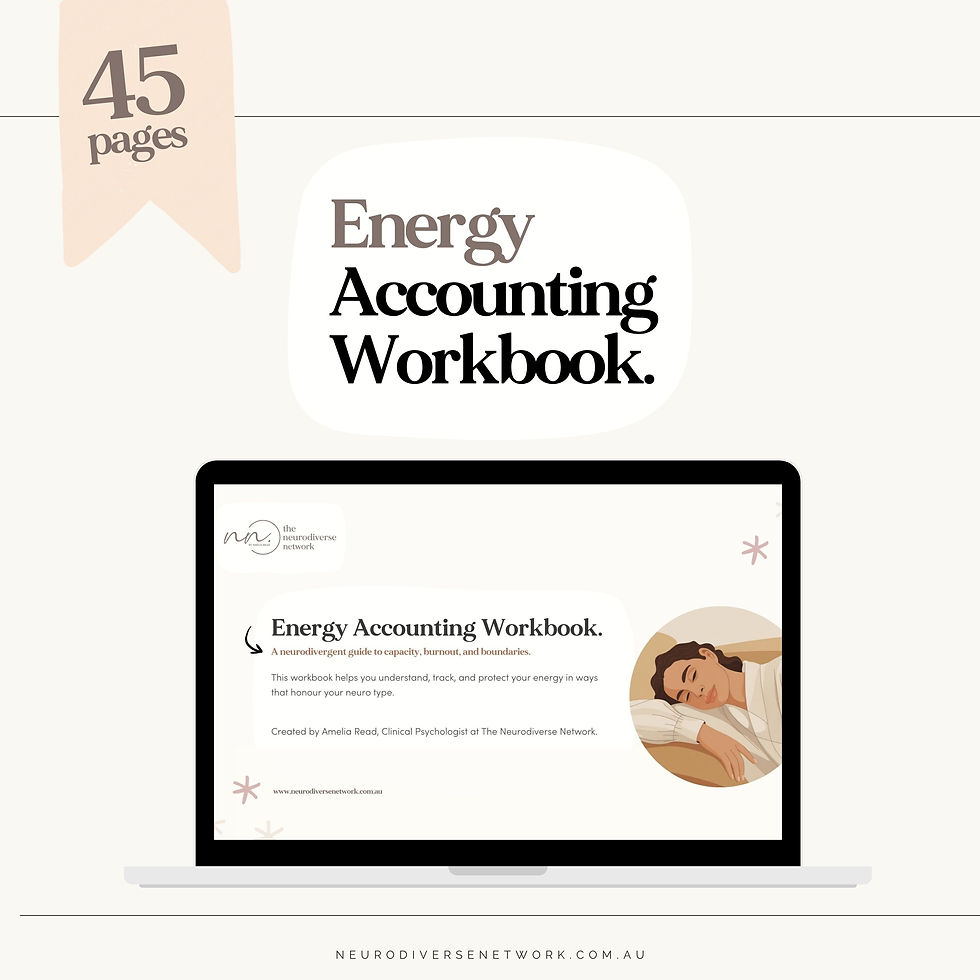
I created the Energy Accounting Workbook as a soft, neuroaffirming guide to help you identify drains, understand your real capacity, and map the rhythms of your year so next December feels different.
You can explore it on my website if it resonates.
But even without it, please hold onto this:
Your end-of-year burnout is real.Your limits make sense.And your nervous system deserves compassion, not criticism.
— Amelia 🤍

As the Founder, Director, and Principal Psychologist at The Neurodiversity Network, Gold Coast Amelia brings over a decade of expertise in the mental health sector.
Amelia has a strong focus on neurodevelopmental conditions such as autism, ADHD, specific learning disorders, and related challenges. With a Master's Degree in Clinical Psychology, she has dedicated her career to providing tailored support to children, adults, and families navigating the complexities of neurodiversity.
Amelia’s approach is both evidence-based and deeply informed by her own lived experience. Diagnosed with ADHD and autism herself, she understands firsthand the unique perspectives and challenges of neurodivergence. This personal insight has fueled her mission to champion and empower the neurodiverse community through compassionate care and advocacy.
Her expertise includes diagnostic assessments, ADHD/autism coaching, parent education, and preventative/proactive interventions. Alongside her dynamic team, Amelia also supports eligible clients in accessing and navigating the National Disability Insurance Scheme (NDIS), ensuring a holistic and multidisciplinary approach to care.


Comments