
AuDHD in Women Community Voices with Leanne Maskell


Tell us a little about yourself.
As the founder of ADHD Works, I’ve written books including ADHD: an A to Z and AuDHD: Blooming Differently, certified over a thousand ADHD and AuDHD coaches and supervisors globally, and trained companies including Disney and Google on neurodiversity.
Autism and ADHD affects every part of my life, because being neurodivergent is how I experience the world - thinking differently to ‘most’ is just part of who I am.
I don’t struggle with a deficit of attention, as much as challenges controlling it. This can often see me existing as a ‘human doing’, instead of a human being.
Professionally, AuDHD makes me capable of extraordinary achievements, such as writing a book in a few weeks through intense monotropic hyperfocus. However, this often comes at a personal cost, as the supposedly ‘easy’ things like cooking, cleaning, or socialising become very difficult.
I used to spend a lot of time beating myself up, but learning about AuDHD has helped me to work with my brain, instead of against it.
When did you first realise your brain worked differently?

A teacher once asked the entire class if I’d cheated in my exams, as they couldn’t believe I had gotten straight A’s. I couldn’t explain it either - I couldn’t focus in class, but I’d managed to teach myself entire subjects before the exams.
Several years later, I was very surprised to be diagnosed with ADHD. I’d finally visited a psychiatrist after having a mental health crisis, and didn’t accept the diagnosis at first. I was nothing like the stereotypical hyperactive little boy - but writing ADHD: an A to Z helped me to accept that my brain did indeed work differently.
Working with AuDHDers and learning about autism meant that
I also self-identified as autistic for several years
But I didn’t seek an assessment until the age of 31, not seeing the point. This was following another mental health crisis, where I remembered how much the ADHD diagnosis itself had changed my life, regardless of the ‘help’ available on the other side.
As it turned out, this was probably my biggest turning point in realising that other people did genuinely see the world differently to me - and accepting my own vulnerability because of this.
Looking back, what is something you wish people had understood about you growing up and AuDHD in Women?
As AuDHD is so highly situational, I grew up frustrated at my inability to ‘do what I know’.
Despite my best efforts to be ‘normal’, I was often getting into trouble or falling out with friends for reasons I didn’t understand, such as following instructions literally or asking direct questions.
I wish that other people could understand how differently my brain works and interprets the same things they do. We might be speaking the same language, but have very different interpretations of what’s being said. This can make communicating much harder than it needs to be, and result in unnecessary conflict!
If people accepted that we all think differently, and presume the best of intentions in others, then I would spend a lot less time questioning and explaining myself. Unfortunately this doesn’t go away, even with a diagnosis - because it’s very hard to imagine that someone is genuinely experiencing the world differently to you.
Ultimately, it would be great if people understood that neurodivergence is an explanation, not an excuse. This goes both ways: accepting this explanation means dropping expectations and assumptions about the motives behind someone who’s interacting differently to you, such as not equating a lack of eye contact with rudeness!
Has your AuDHD influenced the way you work, create or connect with others?
My neurodivergence affects every part of how I interact with other people, including in my professional and personal life. Understanding that I think differently to ‘most’ has helped me to take responsibility for the ‘creative adjustments’ I’d previously adopted to cope with socialising - such as drinking excessive alcohol!
Today, accepting that I struggle with unstructured socialising helps me to avoid these situations all together, rather than trying to force myself to cope through them!
It’s also enabled me to find people who have the same idea of ‘fun’ as me - I’ve just come back from a mermaid retreat sailing on the Whitsundays with 8 other women, no alcohol involved!
I also recognise that my literal interpretation of language can result in people pleasing spirals, as I hear ‘can you…’ literally. This means that I often say yes, but it doesn’t necessarily mean that I want to do something!
Simply understanding aspects like this about my brain has helped me to structure my life and relationships in a way that works for me, instead of beating myself up for the way I am.
What has been one of the biggest challenges you've faced—and what has genuinely helped?

In my early 20s, I experienced a significant mental health crisis after graduating from university. I spiralled into obsessive suicidal ideation on daily basis, only to wake up bewildered and embarrassed - before it happened all over again.
This went on for months. I couldn’t understand what was happening, or how to stop it. It just felt like a default response to daily reminders that I didn’t fit into the world.
I tried to tell a doctor, who told me I was fine because I had a law degree.
Eventually, I recognised that my life was in serious danger and visited a psychiatrist, who I’d found from Google.
For the first time ever, I opened up in full about the dark reality of my internal rollercoaster - and was told I had ADHD.
I didn’t accept this at first, but it sparked a thread that I followed over the next year, whenever the same feeling arose.
Learning about Rejection Sensitive Dysphoria from a podcast was the lightbulb moment that enabled me to genuinely accept this diagnosis and get help. Hearing about how RSD is connected so strongly with ADHD, and how it can result in time-limited periods of intense emotional pain, even suicidal ideation, was indescribable. Until then, I thought I was the only person in the world who felt that way.
Everything changed from that point on, because I finally accepted that there was a genuine reason for this, and it wasn’t just a matter of being weak or ‘crazy’. It started me on a path of learning everything I could about neurodivergence, and I guess I’m still on it!
Was there a moment when you finally felt understood or accepted in the Community?
When I first heard about coaching, it sounded like a scam. I didn’t need help to do the things I wanted to do - I needed the opposite! I had a thousand ideas a day and appeared very ‘successful’ through working in law, but in reality, was really struggling in a highly bureaucratic environment.
I wondered if such a thing as an ADHD coach existed, searching online. Within a few hours, I was talking to someone whose journey mirrored mine. She had previously worked as a lawyer and experienced the same paradoxical challenges, and was fully aware of Rejection Sensitive Dysphoria and how it could show up.
It felt like meeting Hagrid at Hogwarts - she was the first person I’d ever met who also had ADHD, and she represented a path forward that wasn’t forcing myself to be ‘normal’, but working with my brain as it was.
That 20 minute introductory call was life-changing, because I realised that ADHD wasn’t a burden, illness, or problem to fix, but a part of myself to accept and embrace. This is why I do what I do with ADHD Works - these conversations can save and change lives, just by realising that you’re not alone.
If someone is newly diagnosed, or a parent that has just learned their child is neurodivergent—what would you want them to know?
As many people are ‘diagnosed and dumped’, it would be helpful to hear some reassurance, information about what this means on an emotional and practical level, and guidance about what to do next.
After meeting with NSW Health about the reforms enabling GPs to diagnose people with ADHD, I created a worksheet for them to share with patients after a diagnosis, which is freely available here.
Being diagnosed with a neurodevelopmental condition is a huge shift, even if you had previously suspected that you were neurodivergent. This ‘official’ confirmation can feel validating, but also come with a lot of grief. Your entire past might suddenly make sense, but your future has suddenly become unknown.
It’s a lifelong process, and above all, important to be kind to yourself. There’s no ‘fix’ or ‘solution’, because you’re not broken. You just have more information about yourself now - which is a good thing!
What does living authentically look like for you now?
It was in an ADHD coaching session that I realised I had to have a life that aligned with my curious, creative brain - because it took so much energy to keep it squished into a box!
This led me to start living in the ways that I wanted to, instead of how society says we ‘should’ be. I quit my legal job and set up ADHD Works, creating a career that worked for my squiggly brain, instead of trying to force myself into someone else’s cubicle.
For me, living authentically means being on my own side as much as possible, instead of abandoning myself. Whether it’s dying my hair pink or owning my mistakes, I try to get curious about who I am and what I want. Instead of expecting myself to have everything figured out, or comparing myself to my peers (the majority of whom are married with children!), I’m still figuring it out as I go.
Understanding my own AuDHD helps me to adapt to these ‘plot twists’, which can seemingly come out of the blue (such as moving to Australia with 2 weeks notice!), instead of trying to control them.
Embracing my neurodivergence has enabled me to change my inner narrative from a constant battle against myself, to one where I am simply allowed to be who I am - whoever that might be today!
What's one misconception about neurodivergence that you'd love to challenge?
The misconception I’d love to challenge is that people who are discovering or learning about their own neurodivergence are just ‘jumping on a bandwagon’.
There’s so much misinformation about this, from assumptions about the magical waterfall of government benefits that is supposedly unlocked, to claims that a diagnosis is an excuse for laziness and entitlement.
Ironically, the reality is the exact opposite. They are individuals looking for answers and support, and they deserve to receive it without judgement.
I’m commonly invited on national radio shows to discuss misconceptions like this, and no matter which myth is hitting headlines, I ask the same question: why does it matter? Why do people care so much if others are seeking help? Who is benefitting from their outrage, and what is this distracting from?
Following the question of ‘why’ is helpful for any misconception, from medication to accommodations. Often, the outrage stems from a place of feeling that it’s ‘not fair’ to other people, especially if these people ‘don’t need it’ - but ask yourself why they would use it, then? If you can walk perfectly fine, would you choose to use a wheelchair instead? If anybody can jump on the 'benefits bandwagon’, what’s stopping you?
Finish this sentence: "If my younger self could see me today, they would know..."
That she is not the problem.
Follow Leanne - https://www.adhdworks.info/
Watch her chat with Amelia on Youtube
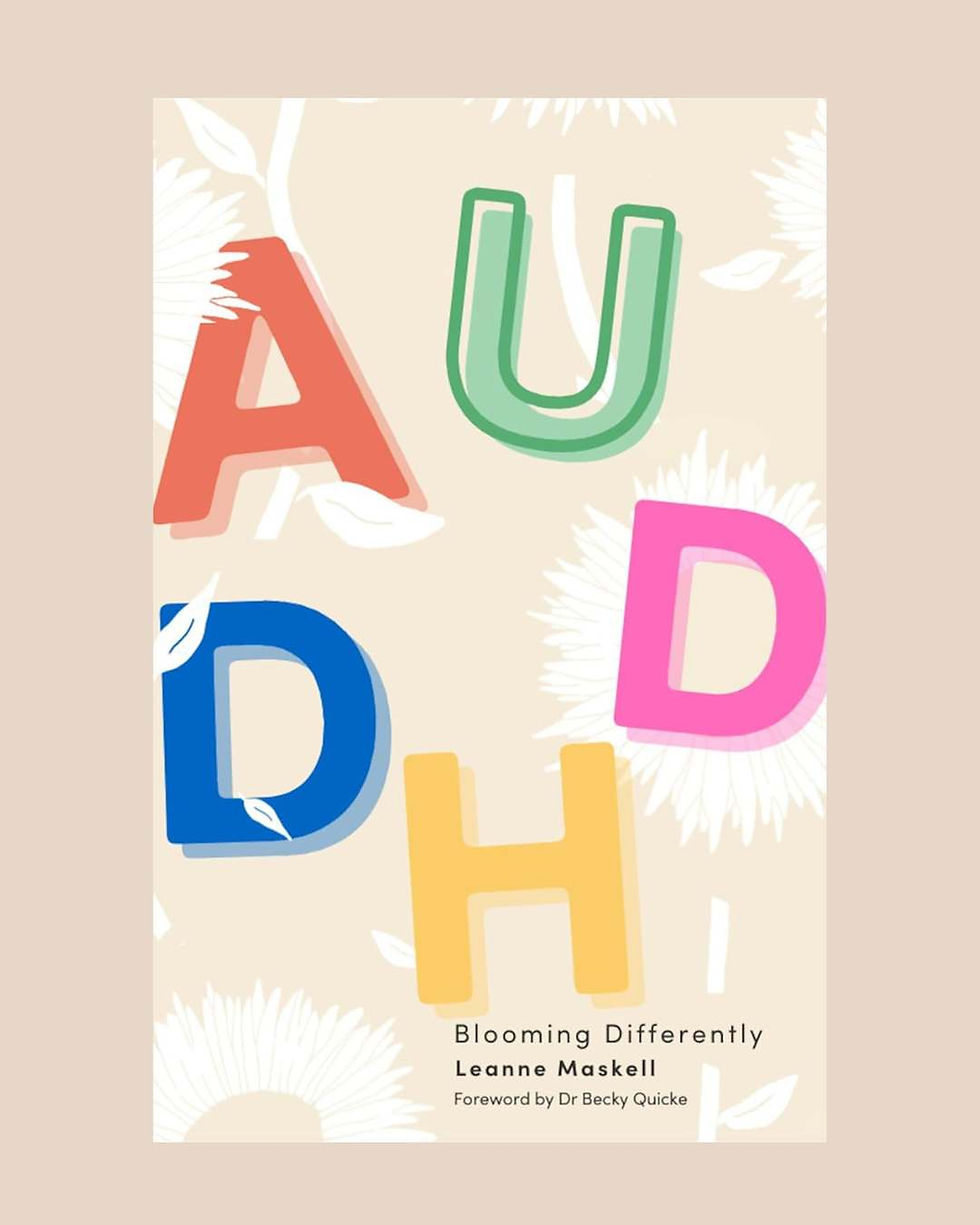
Buy her book here: AuDHD - Blooming Differently

At The Neurodiverse Network, we’re a neuro-affirming psychology clinic based in Burleigh Heads, Gold Coast, offering ADHD and Autism assessments, therapy, and NDIS supports for children, teens, and adults.
Our team of Gold Coast psychologists provide neurodiversity-affirming care, recognising and celebrating the strengths of every individual.
We provide a range of services including:
Gold Coast ADHD assessments and therapy for adults and children
Gold Coast Autism assessments and support across the lifespan
Individual counselling and emotional regulation support
NDIS psychology and functional capacity assessments
Neurodiverse support groups and online workshops
Our psychologists draw on lived experience and evidence-based approaches to create a space where neurodivergent people feel safe, understood, and empowered.
Whether you’re seeking a Clinical Psychologist on the Gold Coast, a neuro-affirming therapist for AuDHD women near Burleigh Heads, or NDIS support, our team is here to help you navigate your journey with compassion and clarity.
Located in Burleigh Heads on the Gold Coast — close to Miami, Palm Beach, Robina, and Varsity Lakes.
Learn more about our neuro-affirming care or book an ADHD or Autism assessment here.

Comments