
Could Gold Coast Counselling Be the Support You Need?

Updated: Oct 7

Life can feel a lot harder when you're carrying too much. Parenting, relationships, work, caring responsibilities and everyday stress can gradually build until you're simply getting through the day.
Counselling can provide a regular space to pause, make sense of what's happening and work out what might help.
Think of counselling as having a co-pilot
You're still in the driver's seat. You decide where you're going and what matters to you.
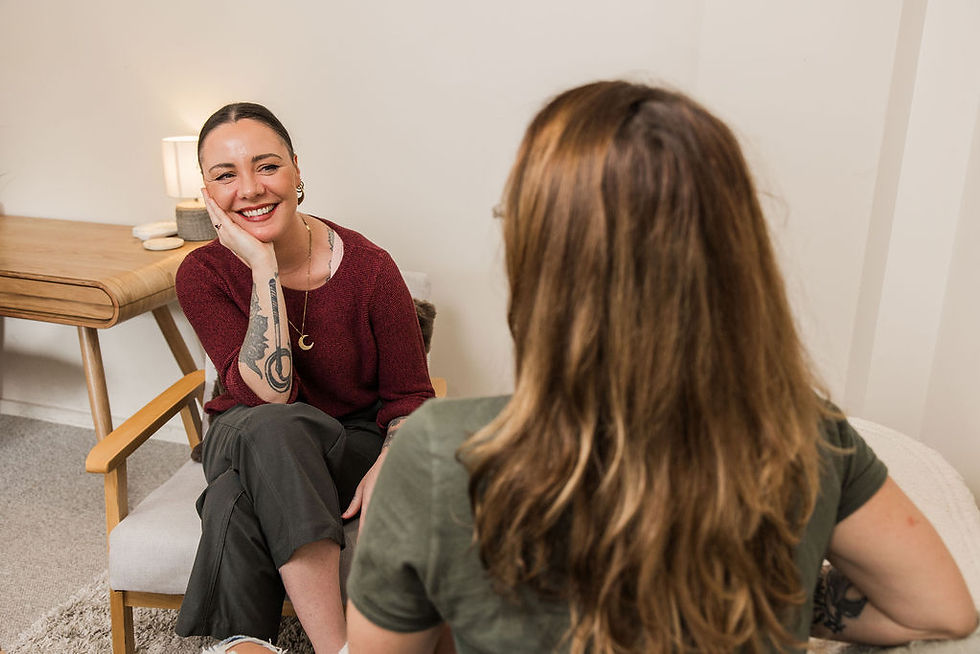
A counsellor sits alongside you, helping you navigate when the road becomes difficult. They can help you notice patterns, explore different ways of responding, develop practical coping strategies and work towards goals that are meaningful to you.
You don't have to wait until you're in crisis to seek counselling.
Who might benefit from Gold Coast counselling?
Counselling can be helpful for people experiencing:
Stress and emotional overwhelm
Parenting challenges
Burnout and carer fatigue
Relationship difficulties
Life transitions
Grief and loss
Workplace stress
Difficulty managing emotions
A sense of feeling stuck or unsure what to do next
For parents and carers of neurodivergent children, counselling can also provide a valuable space to process the emotional demands of family life. School challenges, sensory differences, advocacy, appointments, sibling dynamics and difficult routines can all contribute to significant pressure.
Family Counselling isn't about finding a "perfect" way to parent. It is about understanding your circumstances, recognising your strengths and finding approaches that are sustainable for you and your family.
What is the difference between counselling and psychology sessions?
Psychologist | Qualified Counsellor | |
Primary focus | Psychological assessment, mental health and psychological treatment | Emotional wellbeing, life challenges, relationships and personal development |
Training | University psychology training followed by supervised practice and registration requirements | Counselling qualification through an appropriately recognised training pathway |
Can diagnose? | Yes, within their scope of practice and training | No |
Formal psychological assessment | Yes, where appropriately trained | No |
Psychological therapy | Yes, using evidence-based psychological interventions within their scope | May provide counselling approaches and therapeutic interventions within their training and scope |
Can help with stress & overwhelm? | Yes | Yes |
Parenting & family challenges? | Yes | Yes |
Burnout & life transitions? | Yes | Yes |
Relationship difficulties? | Yes | Yes |
Personal growth & coping strategies? | Yes | Yes |
Neurodivergent family support? | Yes, where within their training and scope | Yes, where they have appropriate knowledge, experience and scope |
When might they be the better fit? | When assessment, diagnosis or psychological treatment is needed | When you want supportive, collaborative counselling around life's challenges and emotional wellbeing |
Can they work together? | Yes | Yes |
You don't have to navigate it alone
Imagine trying to drive through unfamiliar roads while exhausted and overwhelmed. Having someone beside you doesn't make the road disappear, but it can make it easier to see where you're going.
Counselling offers that space to stop, reflect and work out your next step.
A counsellor and psychologist can both support emotional wellbeing, but their training and scope of practice differ. Psychologists can provide psychological assessment, diagnosis and psychological treatment, while Gold Coast counselling may be a suitable option when you are seeking support with life's challenges, relationships, parenting, stress or emotional wellbeing.

Before becoming a counsellor, Monica was a parent searching for ways to make life feel calmer while raising four neurodivergent boys.
As a late-diagnosed AuDHD woman herself, she brings personal understanding of neurodivergence, masking, burnout, self-advocacy, relationships and the complexities of everyday life.
Monica provides warm, collaborative counselling for individuals, parents, carers and families navigating emotional overwhelm, neurodiversity, relationships, advocacy and life transitions.
Her approach draws on ACT, CBT, Humanistic and Somatic Therapy, adapting sessions to each person's needs and creating a space where you can feel understood without needing to mask or have all the answers.
Monica is passionate about helping people develop greater self-understanding, practical strategies and a stronger sense of balance.
She works at The Neurodiverse Network By Amelia Read on Thursdays and Fridays, 10am–5pm, offering in-clinic, in-home, community and Telehealth appointments.
Fees are $156.16 per hour, with NDIS funding or private payment available.
At The Neurodiverse Network, we’re a neuro-affirming psychology clinic based in Burleigh Heads, Gold Coast, offering ADHD and Autism assessments, therapy, and NDIS supports for children, teens, and adults.
Our team of Gold Coast psychologists provide neurodiversity-affirming care, recognising and celebrating the strengths of every individual.
We provide a range of services including:
Gold Coast ADHD assessments and therapy for adults and children
Gold Coast Autism assessments and support across the lifespan
Individual counselling and emotional regulation support
NDIS psychology and functional capacity assessments
Neurodiverse support groups and online workshops
Our psychologists draw on lived experience and evidence-based approaches to create a space where neurodivergent people feel safe, understood, and empowered.
Whether you’re seeking a Clinical Psychologist on the Gold Coast, a neuro-affirming therapist near Burleigh Heads, or NDIS support, our team is here to help you navigate your journey with compassion and clarity.
Located in Burleigh Heads on the Gold Coast — close to Miami, Palm Beach, Robina, and Varsity Lakes.
Learn more about our neuro-affirming care or book an ADHD or Autism assessment here.


Comments